Personalized Regenerative Aesthetic Care & Dedicated International Patient Concierge

Skin Pigmentation Treatment · Needs Clinic Confirmation
CO2 Mole Removal
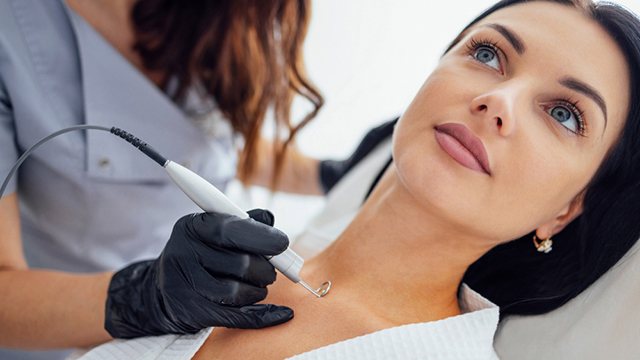
CO2 laser mole removal uses a carbon dioxide laser that reacts selectively with water-rich skin tissue — allowing precise, controlled ablation of localized lesions such as moles, skin tags, and warts while minimizing disruption to the surrounding skin.
Schedule a ConsultationCO2 Mole Removal
What Is CO2 Laser Mole Removal?
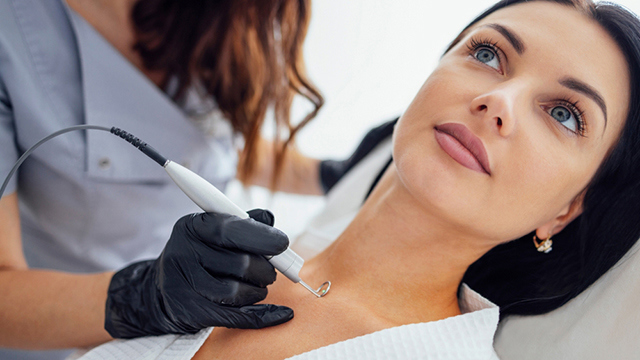
CO2 laser mole removal uses a carbon dioxide laser that reacts selectively with water-rich skin tissue — allowing precise, controlled ablation of localized lesions such as moles, skin tags, and warts while minimizing disruption to the surrounding skin. Unlike surgical excision, which requires incisions and sutures, CO2 laser removal vaporizes the target tissue layer by layer, with the treating physician controlling the depth and energy delivery to match the specific size and depth of each individual lesion.
The relatively low reflection and scattering characteristics of CO2 laser energy mean that irradiation can be directed precisely to the intended depth — removing the lesion cleanly without excessive collateral energy reaching surrounding tissue. Following removal, the treated area undergoes a natural healing process in which surrounding collagen regeneration progressively closes and smooths the skin surface. With appropriate aftercare — regenerative ointment, sun protection, and avoidance of stimulation — clean, natural recovery without scarring is the expected outcome for most patients.
At Vellicell, every CO2 laser removal begins with a physician consultation to assess the lesion's size, depth, and characteristics before determining the appropriate removal scope and energy parameters. Recurrence possibility and re-treatment considerations are discussed openly and honestly at consultation — ensuring patients have complete information before proceeding.
Who Is a Candidate?
CO2 laser removal is suited to patients with localized skin lesions they wish to address cleanly and precisely. Ideal candidates include:
Those bothered by moles, skin tags, warts, or other raised lesions on the face or body that affect their appearance or skin comfort
Patients who want precise, targeted removal of specific lesions without affecting surrounding skin unnecessarily
Those who want minimal surrounding tissue damage — CO2 laser's selective tissue reaction reduces collateral stimulation compared to less precise removal methods
Individuals seeking clean skin surface refinement — removing lesions that interrupt the skin's natural texture and tone
Patients who want honest consultation on recurrence and re-treatment — some lesion types carry a possibility of recurrence, and Vellicell's physicians discuss this openly rather than overpromising a single-session outcome
International visitors who want to address multiple lesions efficiently during their time in Korea, with a clear aftercare protocol they can follow independently
Meet the CO2 Laser Specialist at Vellicell Clinic
|
Dr. Geon Kim, MD |

Dr. Kim Geon — Chief Director
MD, Korea University College of Medicine | Resident, Korea University Medical Center | Former Chief Director, Maypure Clinic (Suji) | Member, Korean Society for Laser Dermatology and Hair · Korean Filler Society · Korean Lifting Society
Dr. Kim's membership in the Korean Society for Laser Dermatology and Hair reflects specialist-level engagement with laser-based treatment including lesion removal technique and depth calibration. Dr. Kim personally assesses every lesion at consultation — determining size, depth, and appropriate energy parameters before any CO2 laser removal is performed. Recurrence potential and aftercare requirements are communicated transparently at every consultation.
CO2 Laser Removal Areas and Expected Improvements
Face — Moles, Skin Tags, and Surface Lesions
Facial lesions — moles on the cheeks, nose, forehead, or around the eyes; skin tags at the eyelid margin or neck — require precise removal with minimal surrounding tissue impact. CO2 laser's depth-controlled ablation makes it particularly suited to the face, where the margin between effective lesion removal and unnecessary skin disruption is narrow. The treating physician calibrates energy delivery individually for each lesion based on its specific size and depth, ensuring clean removal with the smallest possible treatment footprint.Body — Localized Lesions and Skin Tags
For body lesions, CO2 laser removal follows the same principle of lesion-specific energy calibration — adjusting irradiation depth and coverage to each individual lesion's characteristics. Multiple lesions can be addressed in a single session where appropriate, with the physician assessing each one individually before proceeding.Post-Removal Skin Recovery
Following CO2 laser removal, the treated area progresses through a natural healing process. A scab forms over the removal site and separates naturally over approximately one to two weeks as new skin forms beneath. Surrounding collagen regeneration contributes to progressive smoothing of the skin surface during this period. With consistent regenerative ointment application and strict sun protection, most patients achieve clean, natural recovery with minimal visible trace of the treated site.
Expected outcomes include clean lesion removal, smooth skin surface refinement, and natural recovery with appropriate aftercare. Individual healing varies, and recurrence is possible for certain lesion types. Your physician will provide a realistic assessment of expected outcomes and recurrence likelihood at consultation.
CO2 Laser Removal Treatment Process at Vellicell Clinic
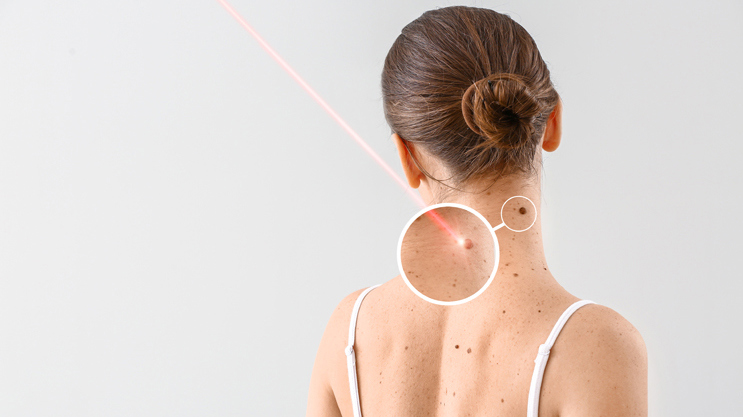
Lesion Assessment and Removal Planning — Your physician examines each lesion individually, assessing size, depth, and type; determines the appropriate energy level and removal scope for each; discusses recurrence possibility and aftercare requirements transparently
CO2 Laser Removal — Carbon dioxide laser is applied precisely to each lesion, ablating tissue to the appropriate depth while minimizing energy delivery to surrounding skin; energy parameters are adjusted per lesion throughout the session
Immediate Post-Treatment Care — Regenerative ointment is applied to the treated sites following removal; the physician provides detailed instructions on tape management, washing restrictions, and sun protection
Recovery and Aftercare Protocol — Avoid water contact on treated areas for approximately one week; replace regenerative tape every 2–3 days according to condition; allow scabs to separate naturally without picking or stimulating; apply strict sunscreen when outdoors once the wound has partially healed; avoid sauna, heat exposure, and intense exercise during the healing period
Follow-Up — Your physician will advise on when to return for a progress check and whether any re-treatment is indicated based on healing response
Results, Safety, and Recovery
CO2 laser mole and skin tag removal produces immediate results — lesions are removed during the treatment session itself, with the treated area progressing through a natural healing process over the following one to two weeks. Once healing is complete, the skin surface in the treated zone is typically smooth and refined, with the lesion no longer visible. With strict sun protection and appropriate aftercare, most patients achieve clean recovery with minimal scarring risk.
The precision of CO2 laser energy delivery — targeting water-rich tissue selectively with controlled depth irradiation — is central to its safety profile for localized lesion removal. By calibrating energy to individual lesion characteristics, the treating physician minimizes unnecessary stimulation to surrounding tissue. Some lesion types carry a possibility of recurrence; this is discussed honestly at consultation so patients can make fully informed decisions.
Post-removal aftercare is essential to achieving the best possible outcome. Scabs must be left to separate naturally — picking or stimulating the treated area increases scarring risk significantly. Sun protection is critical during and after the healing process, as UV exposure to healing skin can cause post-inflammatory pigmentation. Patients experiencing unusual redness, itching, weeping, or other abnormal symptoms during recovery should contact the clinic promptly.
Why Choose Vellicell Clinic for CO2 Laser Removal?
CO2 laser removal at Vellicell is physician-performed throughout — from the initial lesion assessment that determines energy parameters to the removal itself. Dr. Kim personally examines every lesion at consultation, calibrate the CO2 laser to each lesion's specific size and depth, and perform the removal directly. This physician-level involvement in a procedure that is sometimes delegated to non-physician staff at other clinics reflects Vellicell's consistent standard: every treatment, regardless of complexity, is delivered by an MD-qualified specialist director.
For international patients visiting specifically for CO2 laser mole removal, Vellicell's clear aftercare protocol — written instructions on tape management, washing restrictions, sun protection, and recovery timeline — is provided in the patient's language of preference. Multilingual support in English, Chinese, Japanese, and Thai ensures that aftercare guidance is fully understood before patients return home.
Physician-performed removal — lesion assessment, energy calibration, and CO2 laser delivery performed directly by MD-qualified specialist directors
Lesion-specific energy calibration — depth and intensity adjusted individually per lesion based on size and depth assessment at consultation
Transparent recurrence discussion — honest communication on recurrence possibility and re-treatment considerations before proceeding
Multilingual aftercare support — recovery instructions available in English, Chinese, Japanese, and Thai for international patients
Patient Perspectives
Facial Mole Patient, 30s
Multiple facial moles of varying size and depth were assessed individually by Dr. Kim, with energy parameters calibrated per lesion. With consistent ointment application and sun protection, treated sites healed cleanly within two weeks.
International Skin Tag Patient, 40s
An overseas visitor wanting neck and eyelid margin skin tags removed during her Korea trip consulted Dr. Kim. Clear English-language aftercare instructions allowed confident independent recovery management after returning home.
Begin Your CO2 Laser Removal at Vellicell Clinic
Moles, skin tags, and localized lesions that have been bothering you deserve precise, physician-calibrated removal — not a rushed or generic procedure. CO2 laser removal at Vellicell is performed by specialist directors who assess each lesion individually, calibrate energy to its specific depth, and provide a structured aftercare protocol for clean, natural recovery. Whether you are addressing one lesion or several, Vellicell is ready to design a removal plan built entirely around your skin's specific needs.
[Book Your CO2 Laser Consultation Today — Speak Directly with a Physician Director]
Multilingual support available in English, Chinese, Japanese, and Thai. Open daily, including Sundays and public holidays.
Other Services
Explore additional treatments offered by our specialists.

Wegovy
Wegovy (semaglutide) is a prescription injectable medication for obesity treatment classified as a GLP-1 (glucagon-like peptide-1) receptor agonist.
Learn More

Volnewmer Lifting
Volnewmer is a non-surgical radiofrequency lifting treatment that delivers 6.78MHz monopolar RF thermal energy directly to the dermis, inducing tissue coagulation and triggering a collagen regeneration response.
Learn More
Ultherapy Prime
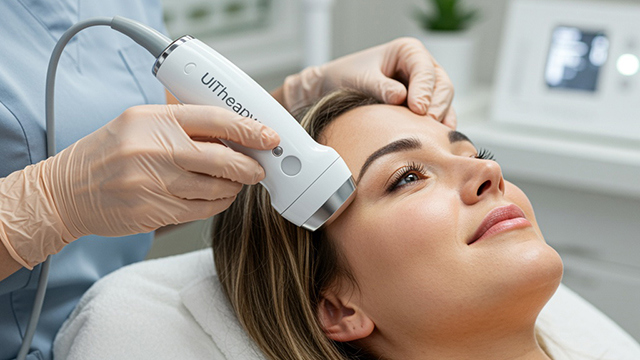
Ultherapy Prime is an advanced non-surgical lifting treatment that uses focused ultrasound energy to target the SMAS layer.
Learn More